Garage Door Spring Failure: Exact Lifespan by Usage, Climate, and Door Weight (Engineering Breakdown)
Garage Door Spring Failure: Lifespan by Usage, Climate, and Door Weight (Full Breakdown)
Garage door springs are the most critical—and most commonly failing—component of your garage door system.
Most homeowners are told springs last “7–10 years,” but that estimate ignores key variables like usage frequency, door weight, and climate conditions.
In reality, spring lifespan can vary by thousands of cycles, meaning your door could fail years earlier (or last significantly longer) depending on your setup.
This guide breaks down exactly what determines spring lifespan and how to predict—and extend—it.
What Garage Door Springs Actually Do
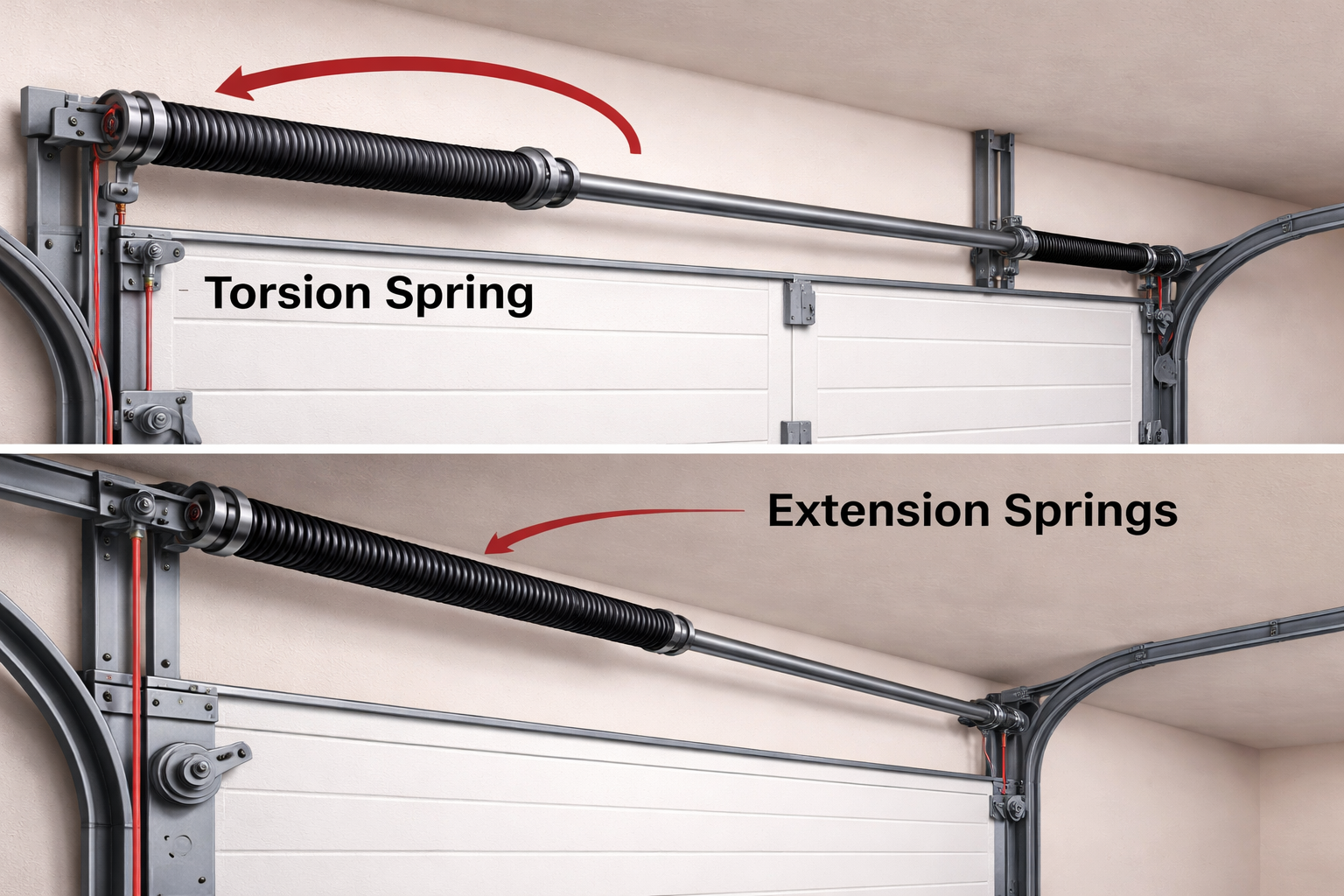
Garage door springs counterbalance the weight of the door, making it possible to open and close smoothly.
There are two main types:
- Torsion springs (mounted above the door)
- Extension springs (mounted along the tracks)
Torsion systems are more common in modern installations and provide better durability and control.
What “Cycle Rating” Really Means

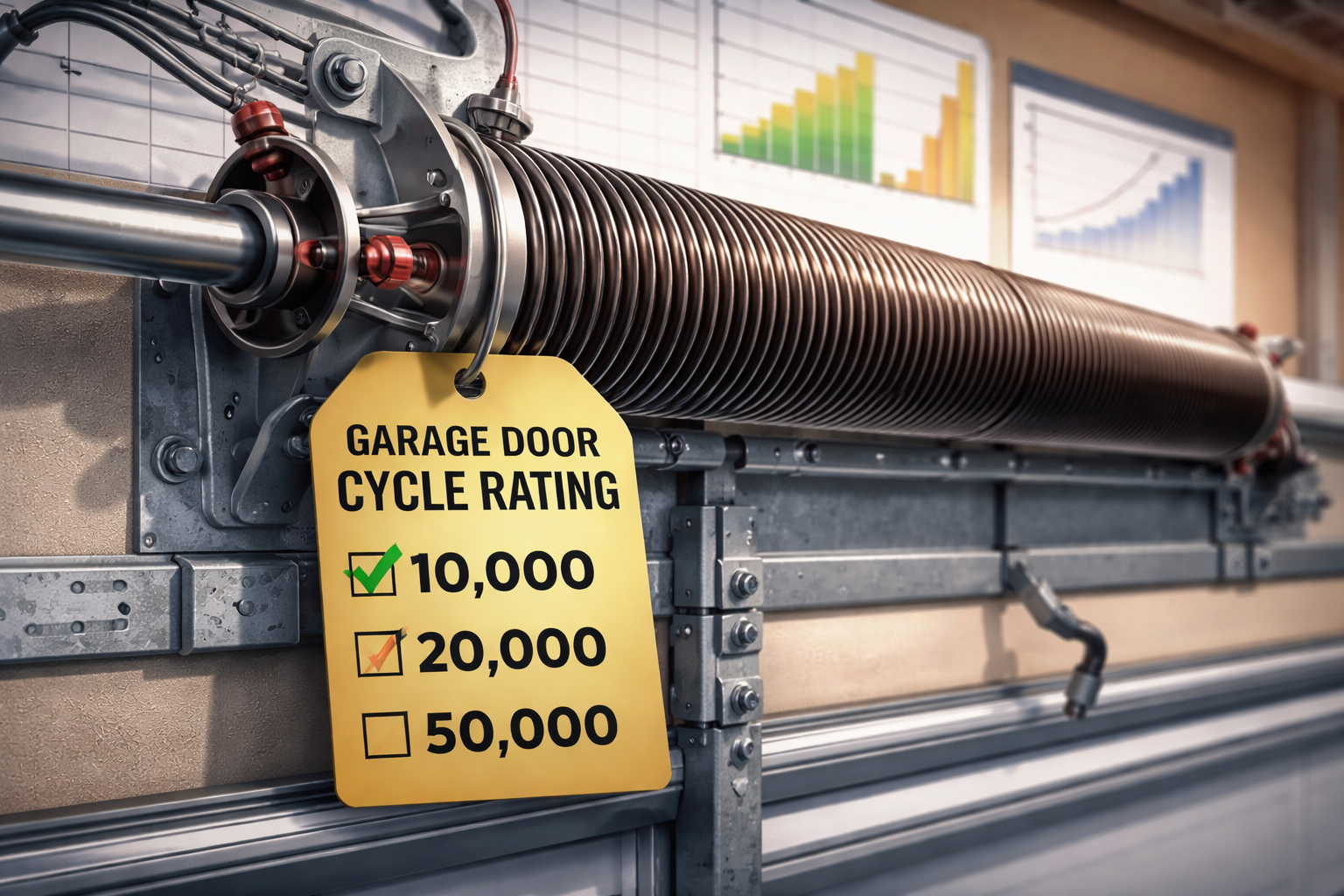
Garage door springs are rated in cycles, not years.
- 1 cycle = 1 full open + close
- Standard springs = ~10,000 cycles
- High-cycle springs = 20,000–50,000+ cycles
How Long Springs Actually Last (Real-World Scenarios)
Here’s where it gets practical.
Light Usage (2 cycles/day)
- ~730 cycles/year
- 10,000-cycle spring = 13–14 years
Moderate Usage (4 cycles/day)
- ~1,460 cycles/year
- 10,000-cycle spring = 6–7 years
Heavy Usage (8+ cycles/day)
- ~3,000 cycles/year
- 10,000-cycle spring = 3–4 years
👉 This is why some homeowners experience “premature failure” — it’s not premature, it’s usage.
Why Springs Fail Faster in Texas (Critical for Manor Area)

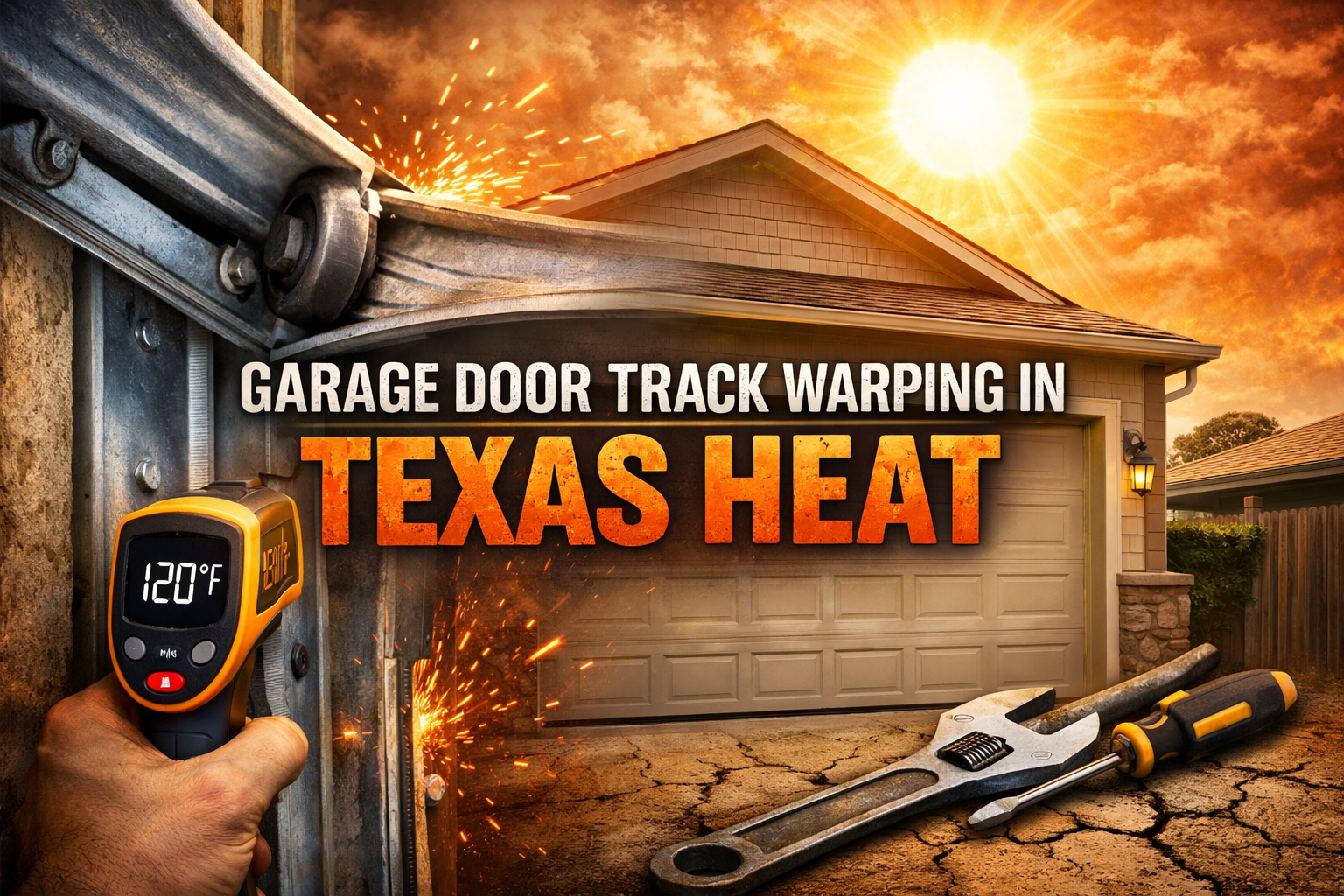
Heat plays a massive role in spring lifespan.
In Central Texas:
- Metal expands and contracts daily
- Lubricants break down faster
- Increased friction accelerates fatigue
This leads to:
- Faster micro-cracking in the steel
- Reduced cycle lifespan
- Higher failure rates in summer
👉 Springs in hot climates can fail 20–30% sooner than rated lifespan.
Door Weight: The Hidden Factor Nobody Talks About

Heavier doors = more tension = faster fatigue
Factors that increase load:
- Insulated doors
- Solid wood doors
- Oversized doors (8ft+ tall)
- Wind-rated systems
If springs are not properly matched to door weight:
- They wear out faster
- Opener works harder
- System becomes unsafe
Signs Your Spring Is About to Fail
Watch for:
- Slower door movement
- Loud snapping or creaking
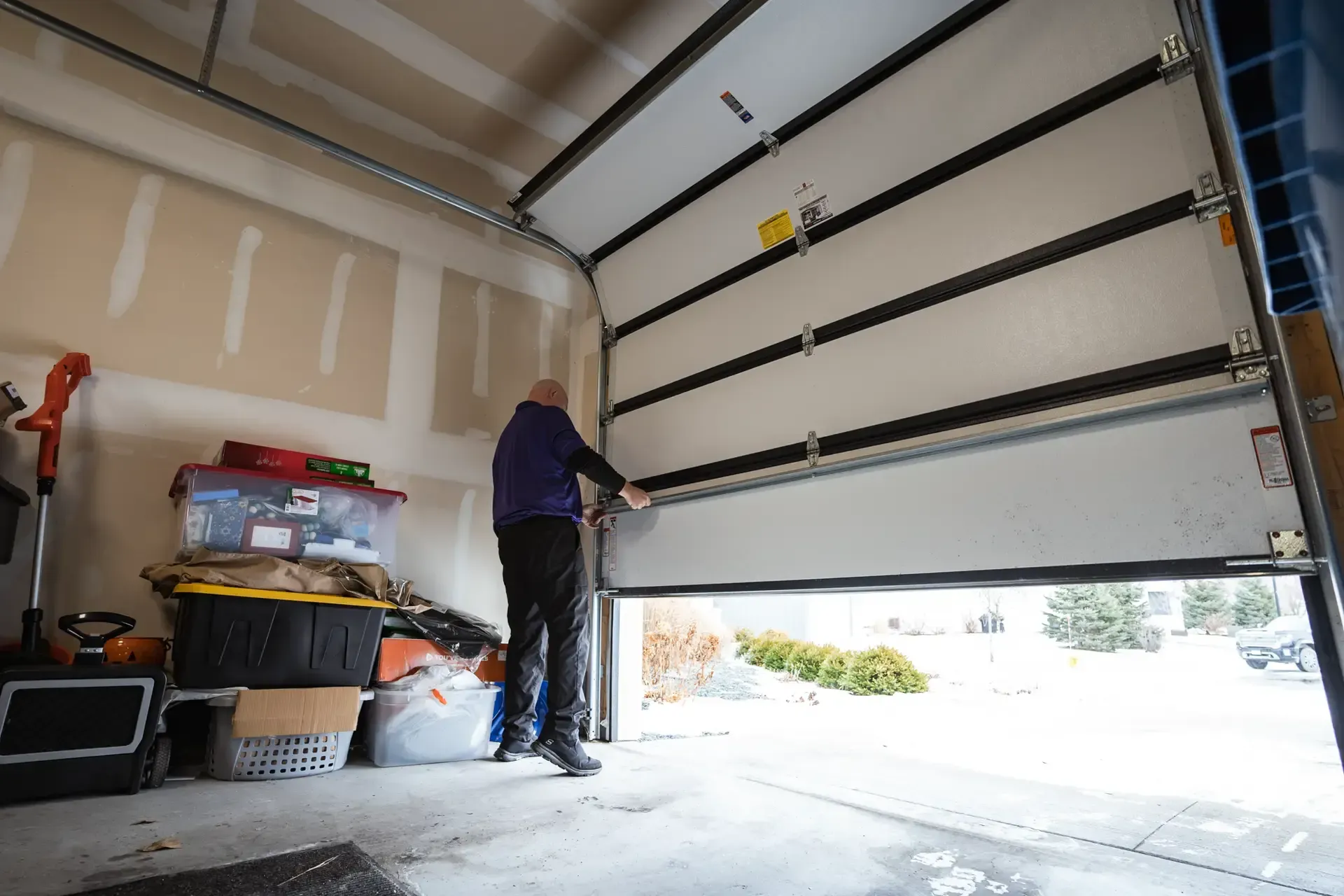
- Door feels heavy when opening manually
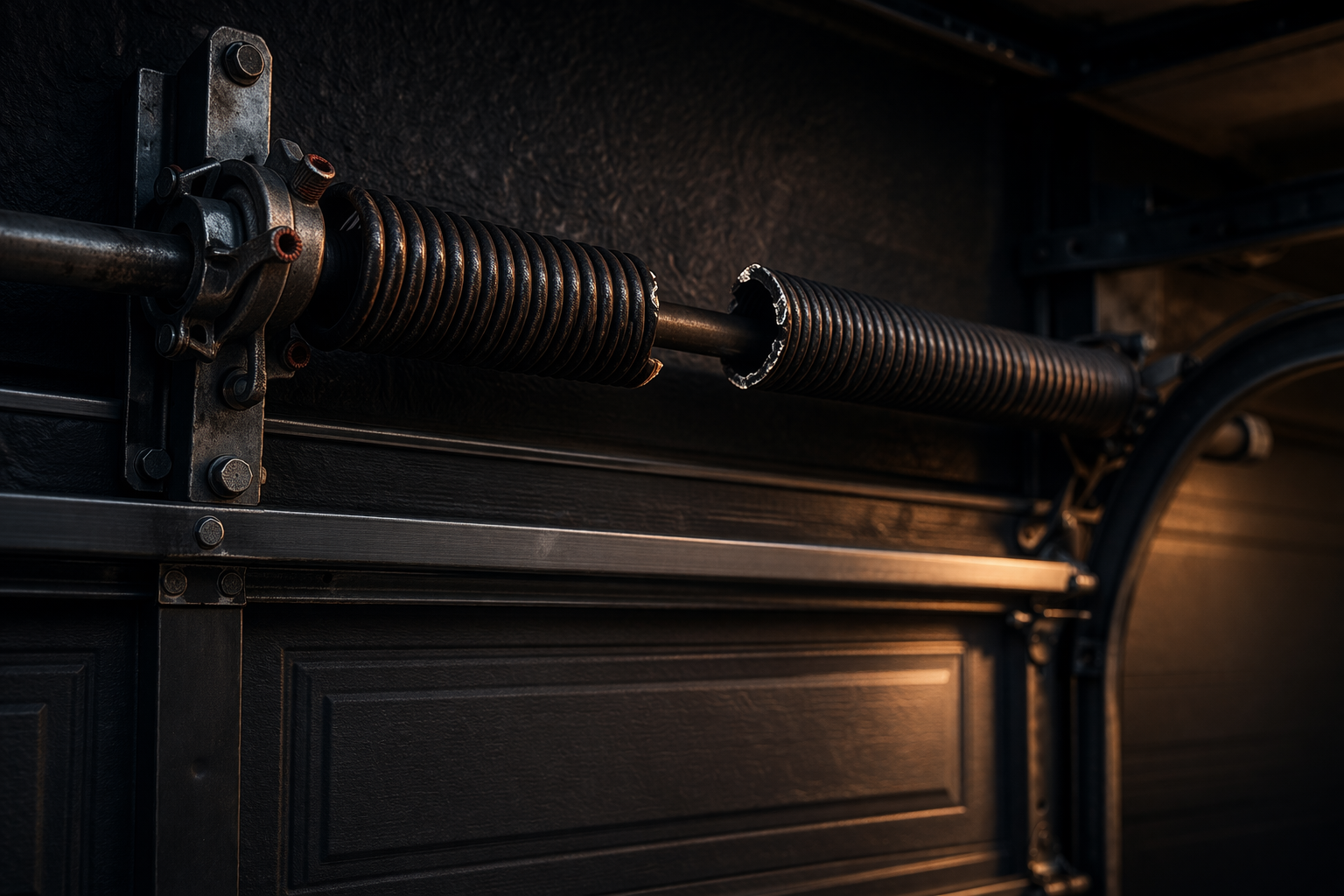
- Visible gaps in torsion spring
- Door not staying open halfway
Ignoring these signs often leads to sudden failure
What Happens When a Spring Breaks
When a torsion spring fails:
- Door becomes extremely heavy (can exceed 150–300 lbs)
- Opener may stop working or strain
- Door may slam shut or not open at all
⚠️ This is a high-risk situation and should not be DIY repaired.
How to Extend Spring Lifespan
You can significantly increase lifespan with:
1. Regular Lubrication
- Use garage door–specific lubricant
- Apply every 3–6 months
2. Balanced System Checks
- Door should stay halfway open without falling
- Imbalance = extra strain on springs
3. Upgrade to High-Cycle Springs
- Especially for high-usage households
- Small upfront cost → big long-term savings
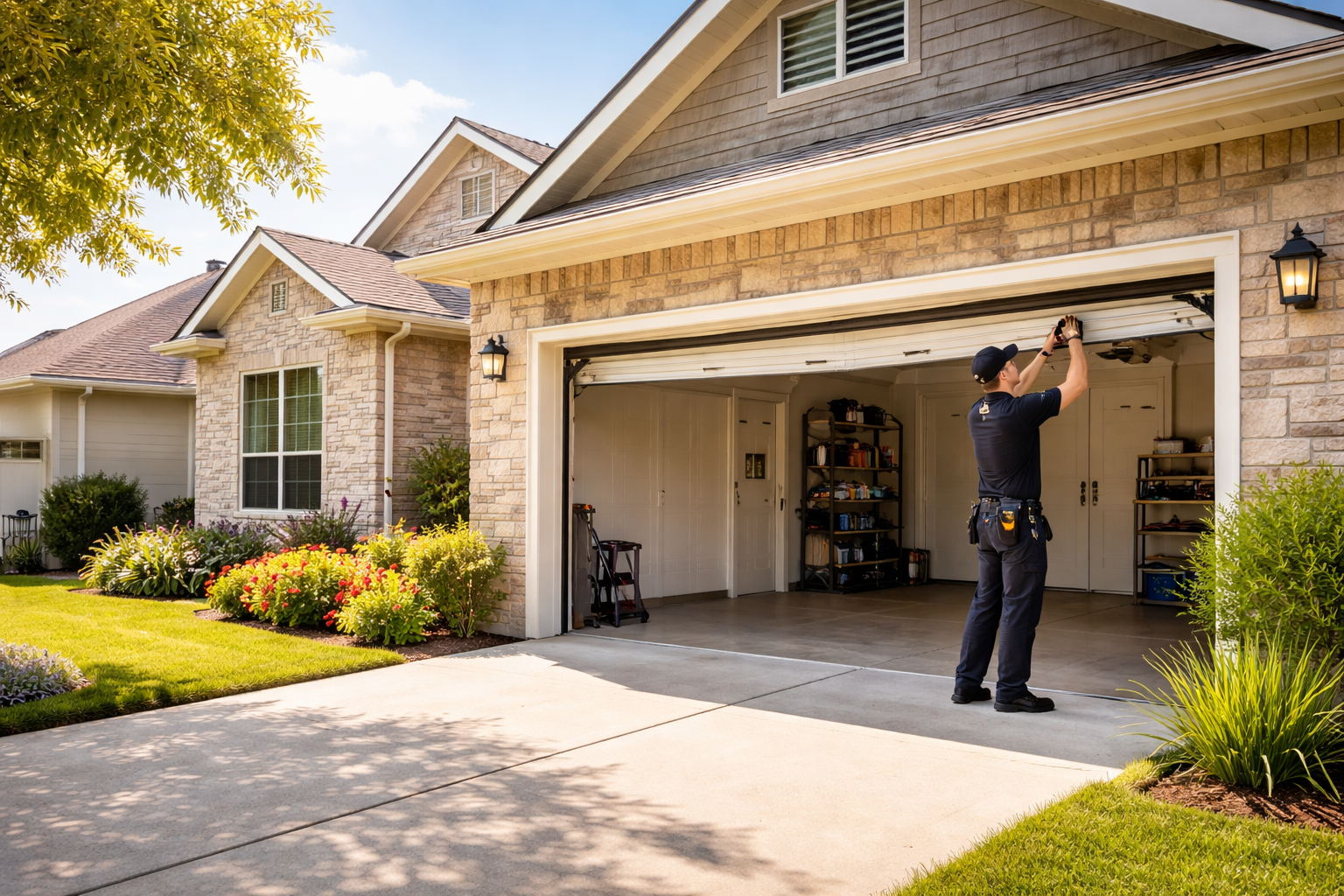
4. Professional Inspection
- Catch wear before failure
- Prevent emergency breakdowns
Should You Upgrade Your Springs?

If you:
- Use your garage as a primary entry
- Have multiple drivers
- Run a business from home
👉 High-cycle springs are almost always worth it
They can last 2–5x longer than standard springs.
When to Replace vs Repair
Springs are not repaired—they are replaced.
Best practice:
- Replace both springs (even if one breaks)
- Ensures balanced performance
- Prevents second failure shortly after
Signs Your Garage Door Needs Repair
Cost vs Value Breakdown
While standard springs are cheaper upfront:
- More frequent replacements
- Higher long-term cost
- More inconvenience
High-cycle springs:
- Higher upfront cost
- Lower lifetime cost
- Better reliability
Professional Spring Replacement in the Manor Area
If your garage door is showing signs of spring failure, addressing it early can prevent more expensive repairs.
At Mamba Overhead Garage Door, we provide:
- Proper spring sizing based on door weight
- High-cycle spring upgrades
- Safe, professional installation
- Full system balance and inspection
If you're in Hutto, Pflugerville, Manor, Round Rock, or the greater Austin area, our team can help you extend the life of your garage door system and avoid unexpected breakdowns.
🔍 Frequently Asked Questions About Garage Door Spring Lifespan
How long do garage door springs last?
Garage door springs are rated by cycles, not years. A standard 10,000-cycle spring typically lasts 3–7 years depending on usage. Light-use households may get over 10 years, while high-use homes may see failure in as little as 3–4 years.
How many cycles does a garage door spring last?
Most standard torsion springs are rated for around 10,000 cycles. High-cycle springs can range from 20,000 to 50,000+ cycles, offering significantly longer lifespan for frequently used garage doors.
Why do garage door springs break suddenly?
Springs weaken over time due to metal fatigue. Eventually, the steel can no longer handle the tension and snaps, often without much warning. Heat, heavy doors, and high usage all accelerate this process.
Does Texas heat affect garage door springs?
Yes. High temperatures cause expansion and increased metal fatigue, which can shorten spring lifespan by 20–30%. Heat also breaks down lubricants faster, increasing friction and wear.
How do I know if my garage door spring is about to break?
Common warning signs include:
- Slower or uneven door movement
- Loud creaking or popping noises
- The door feels heavy when lifted manually
- Visible gaps in the spring
If you notice these signs, the spring may be close to failure.
Can I open my garage door if the spring is broken?
It is possible but not recommended. The door becomes extremely heavy and can be dangerous to lift. Using the opener can also damage the motor or other components.
Should both garage door springs be replaced at the same time?
Yes. If one spring breaks, the other is likely close to failure since both have undergone similar wear. Replacing both ensures balanced operation and prevents another breakdown shortly after.
What is the difference between standard and high-cycle springs?
Standard springs are typically rated for around 10,000 cycles, while high-cycle springs are designed for 20,000–50,000+ cycles. High-cycle springs last longer and are ideal for homes with frequent garage door use.
Are heavier garage doors harder on springs?
Yes. Heavier doors require more tension, which increases stress on the springs and reduces their lifespan. Proper spring sizing is critical for durability and safe operation.
How can I make my garage door springs last longer?
You can extend spring lifespan by:
- Lubricating springs every 3–6 months
- Keeping the door properly balanced
- Avoiding unnecessary cycles
- Upgrading to high-cycle springs
- Scheduling periodic professional inspections
How much does it cost to replace garage door springs?
Costs vary depending on spring type, door size, and cycle rating. Standard spring replacements are less expensive upfront, while high-cycle springs cost more initially but often save money over time due to their longer lifespan.
Is garage door spring replacement dangerous?
Yes. Garage door springs are under extreme tension and can cause serious injury if handled improperly. Spring replacement should always be performed by a trained professional.