Understanding Garage Door Cycle Ratings: Engineering Limits, Spring Fatigue & Long-Term Cost Analysis
The Hidden Engineering Behind Garage Door Cycle Ratings
How Spring Fatigue, Door Weight & Usage Patterns Determine System Lifespan
Most homeowners think garage doors “just break.”
In reality, every garage door system is engineered with a finite mechanical lifespan measured in cycles.
Understanding cycle ratings — and how they interact with torsion springs, door weight, track alignment, and opener force calibration — is critical for maximizing long-term performance and reducing emergency repair costs.
What Is a Garage Door Cycle Rating?
A cycle equals:
One full open + one full close.
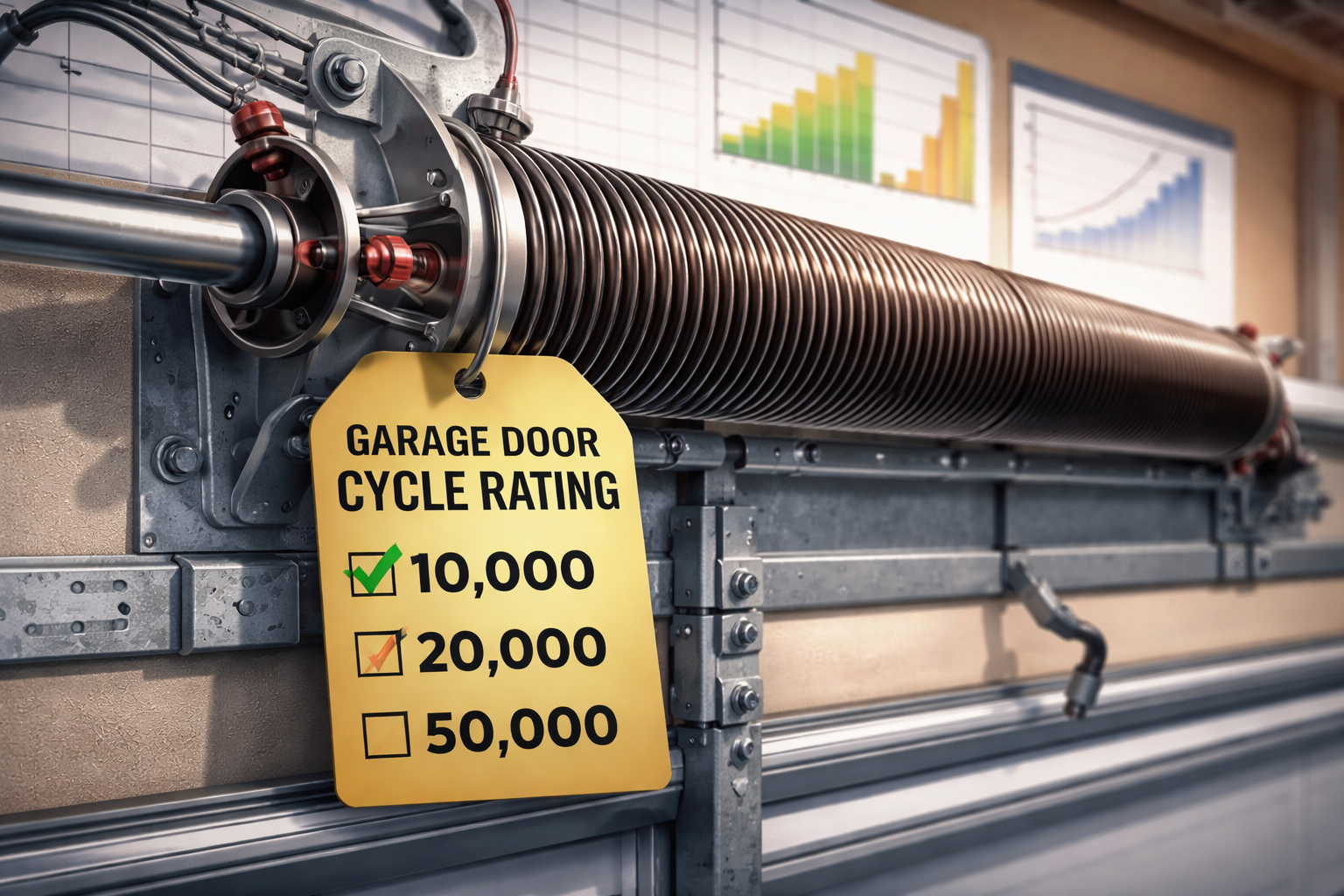
Most residential torsion spring systems are rated for:
- 10,000 cycles (standard builder-grade)
- 20,000 cycles (mid-grade)
- 30,000–50,000 cycles (high-cycle systems)
This rating is determined by:
- Wire diameter
- Coil length
- Inside diameter
- Steel tensile strength
These variables define how many stress expansions and contractions the spring can endure before metal fatigue leads to failure.
The Physics of Spring Fatigue
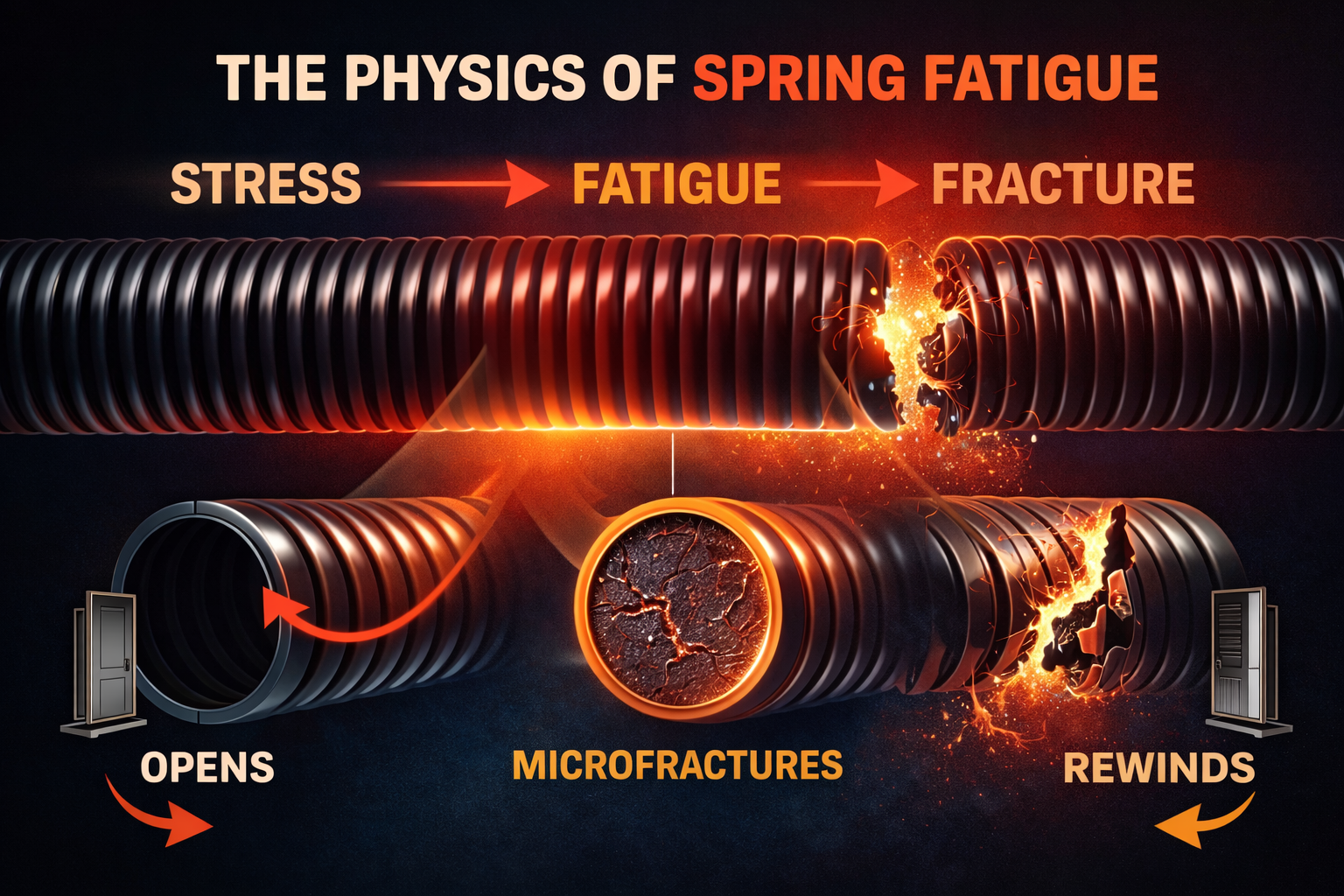
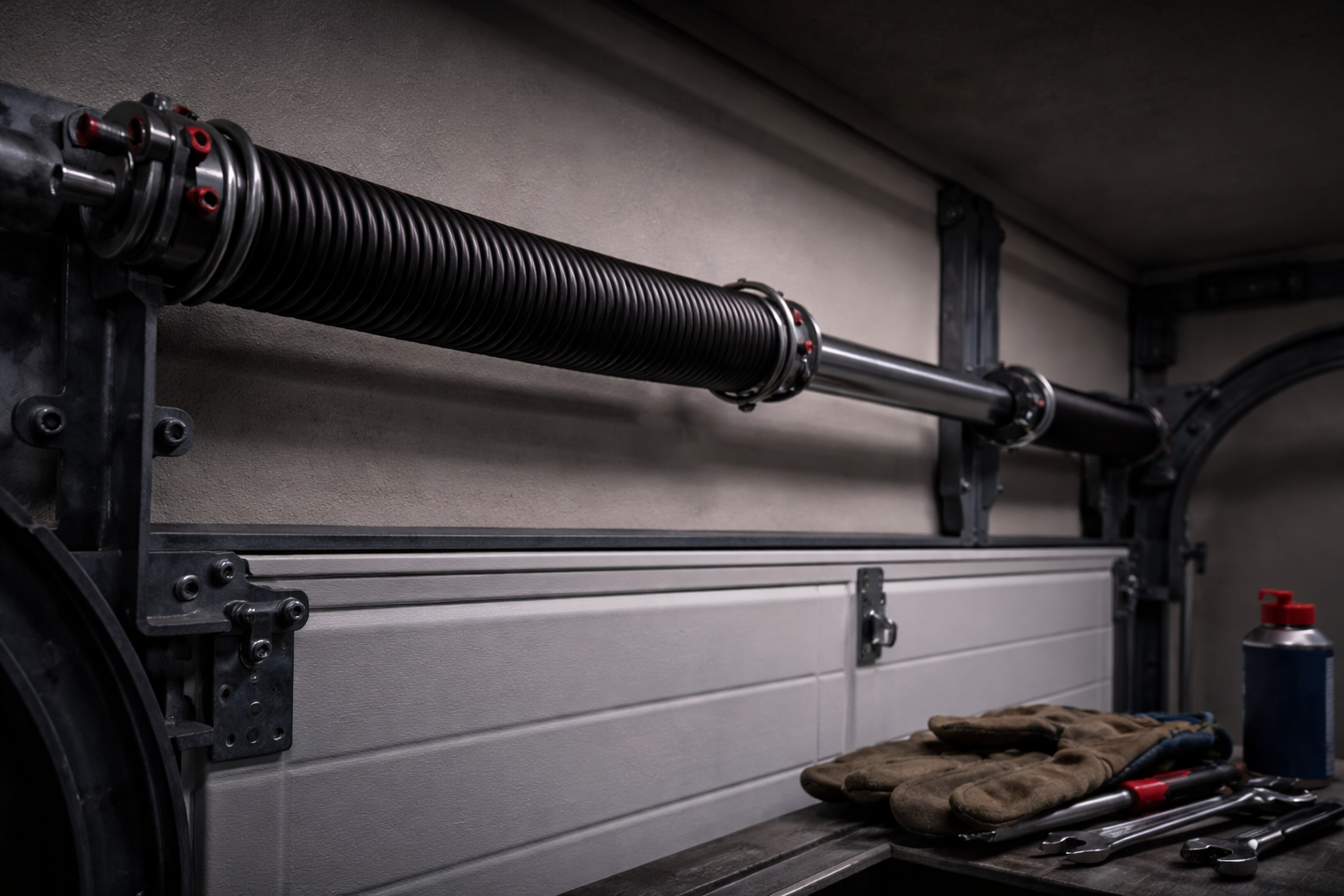
Garage door torsion springs operate under torsional shear stress.
Every time the door opens:
- The spring unwinds
- Stored torque transfers energy to lift the door
When the door closes:
- The spring rewinds
- Steel fibers compress and stretch again
Over time:
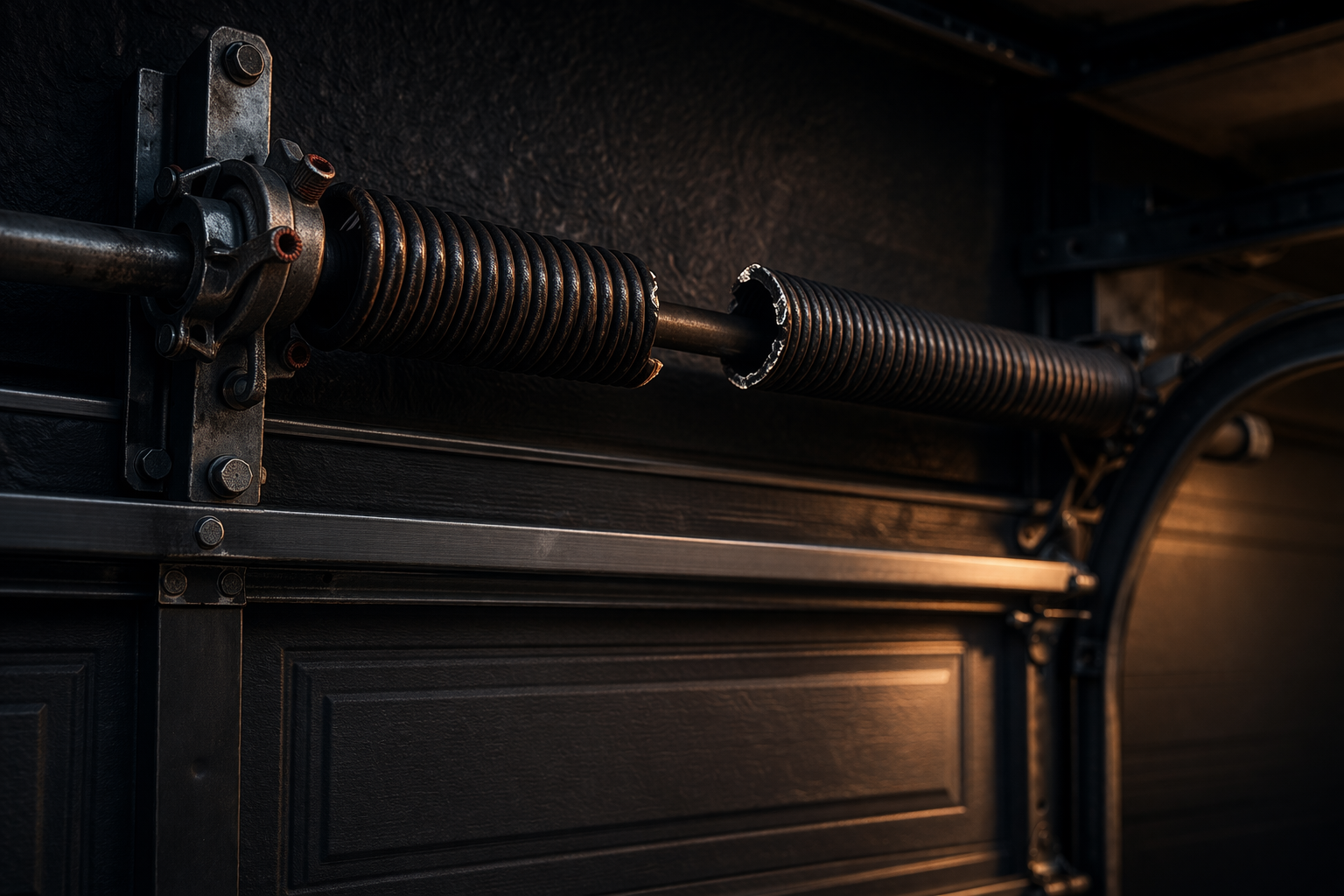
- Microfractures develop in the metal grain
- The spring loses elasticity
- Torque output declines
- Sudden fracture occurs (often heard as a loud bang)
This is not random failure.
It is predictable mechanical fatigue.
Why Door Weight Changes Cycle Life
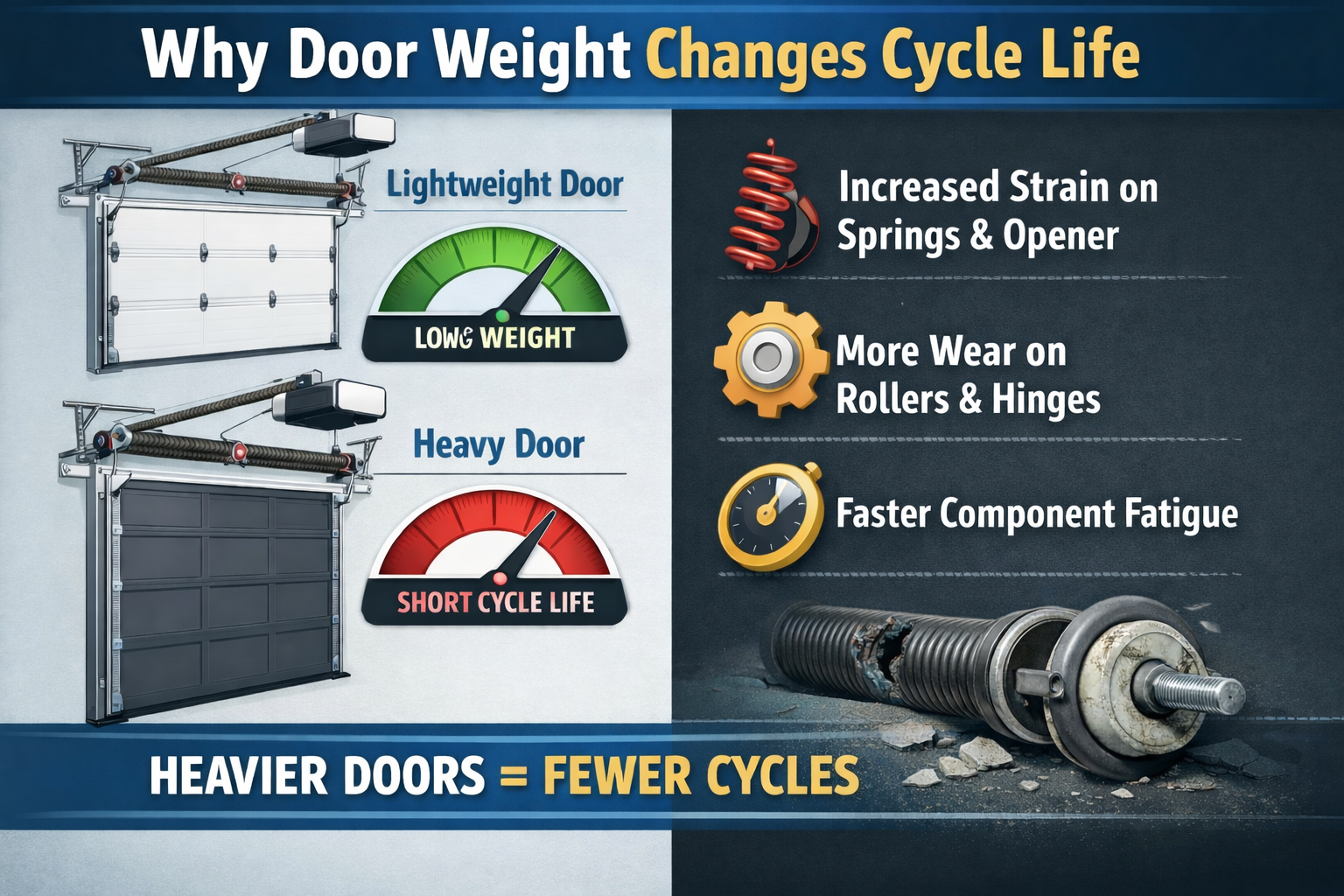
Cycle ratings assume proper weight matching.
If a door weighs 180 lbs but is paired with springs calibrated for 150 lbs:
- The opener compensates
- Springs overstress
- Cycle life shortens dramatically
Added weight sources include:
- Insulated steel backers
- Glass panel upgrades
- Wood overlay designs
- Decorative hardware kits
Even 15–20 additional pounds can reduce lifespan significantly.
High-Cycle vs Standard Springs: Long-Term Cost Comparison
High-cycle torsion springs are engineered to reduce stress per rotation, increasing fatigue resistance and overall service life.
Standard 10,000 Cycle Spring
Average household usage: 4 cycles/day
10,000 ÷ 4 = ~6.8 years
30,000 Cycle Spring
Same usage:
30,000 ÷ 4 = ~20.5 years
When factoring:
- Service call cost
- Emergency repair pricing
- Downtime inconvenience
High-cycle systems often produce a lower lifetime cost.
Usage Patterns That Accelerate Failure
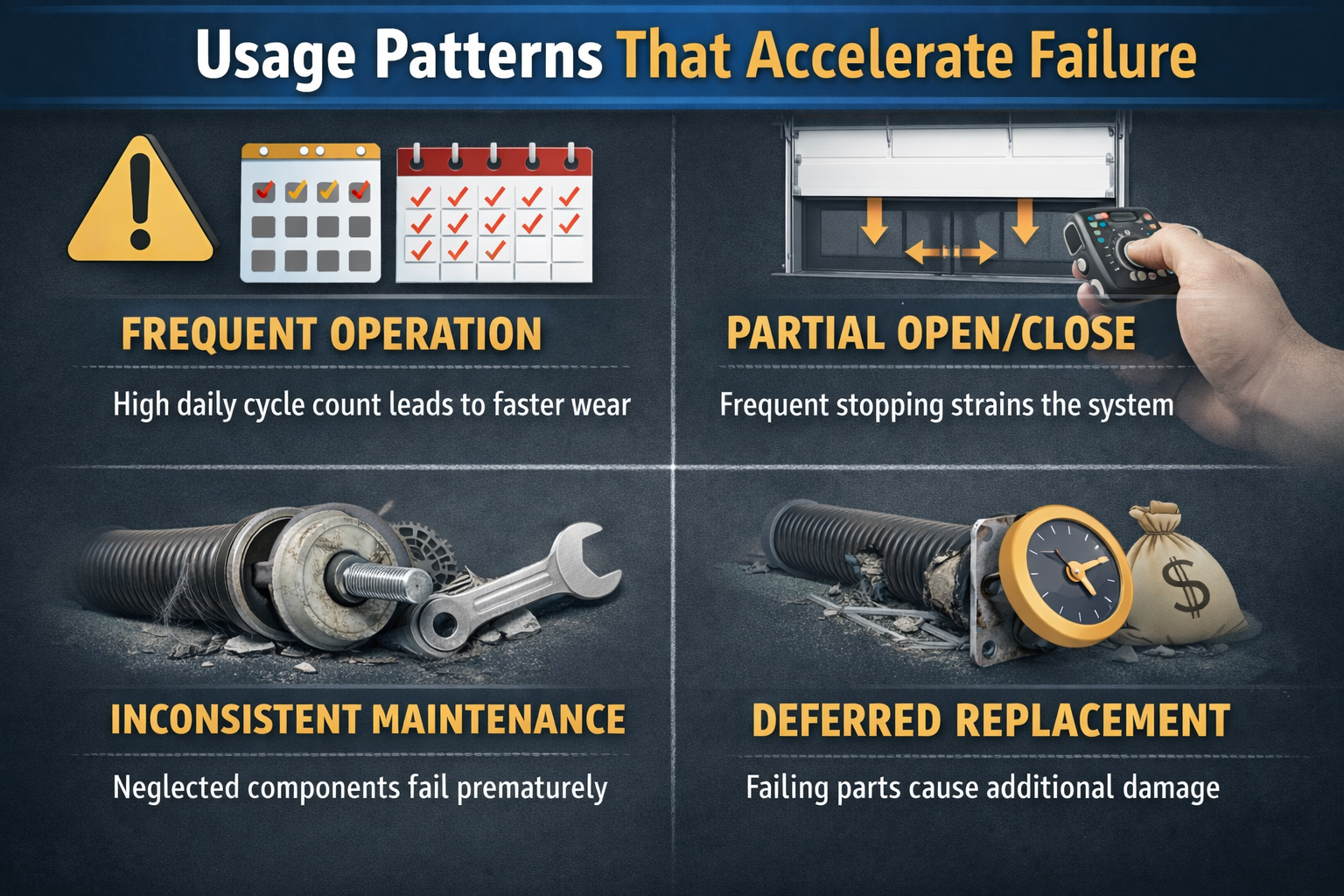
Homes with:
- Multiple drivers
- Teen drivers
- Detached garages used as workshops
- Short commute routines
Often exceed 8–10 cycles per day.
At 10 cycles per day:
10,000 cycle spring lifespan drops to ~2.7 years.
This is why some homeowners experience “unexpected” failures every few years.
Climate & Regional Stress Factors
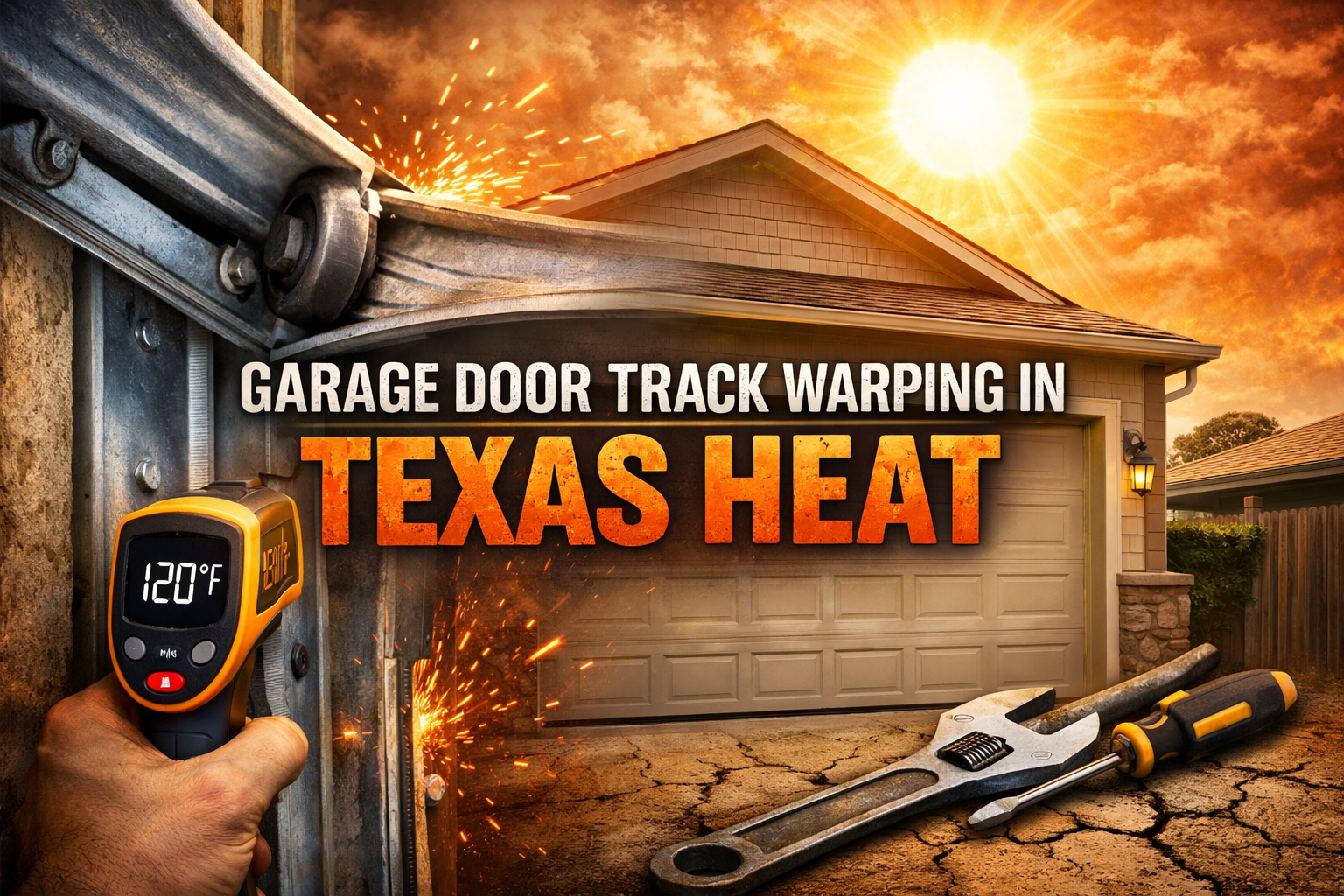
In Central Texas, extreme heat impacts:
- Steel expansion
- Lubrication viscosity
- Seal integrity
- Track alignment
Heat accelerates:
- Oxidation
- Lubricant breakdown
- Bearing wear
Over time, misalignment increases resistance load, forcing springs to compensate.
That shortens fatigue life even further.
Opener Force Calibration & Spring Integrity
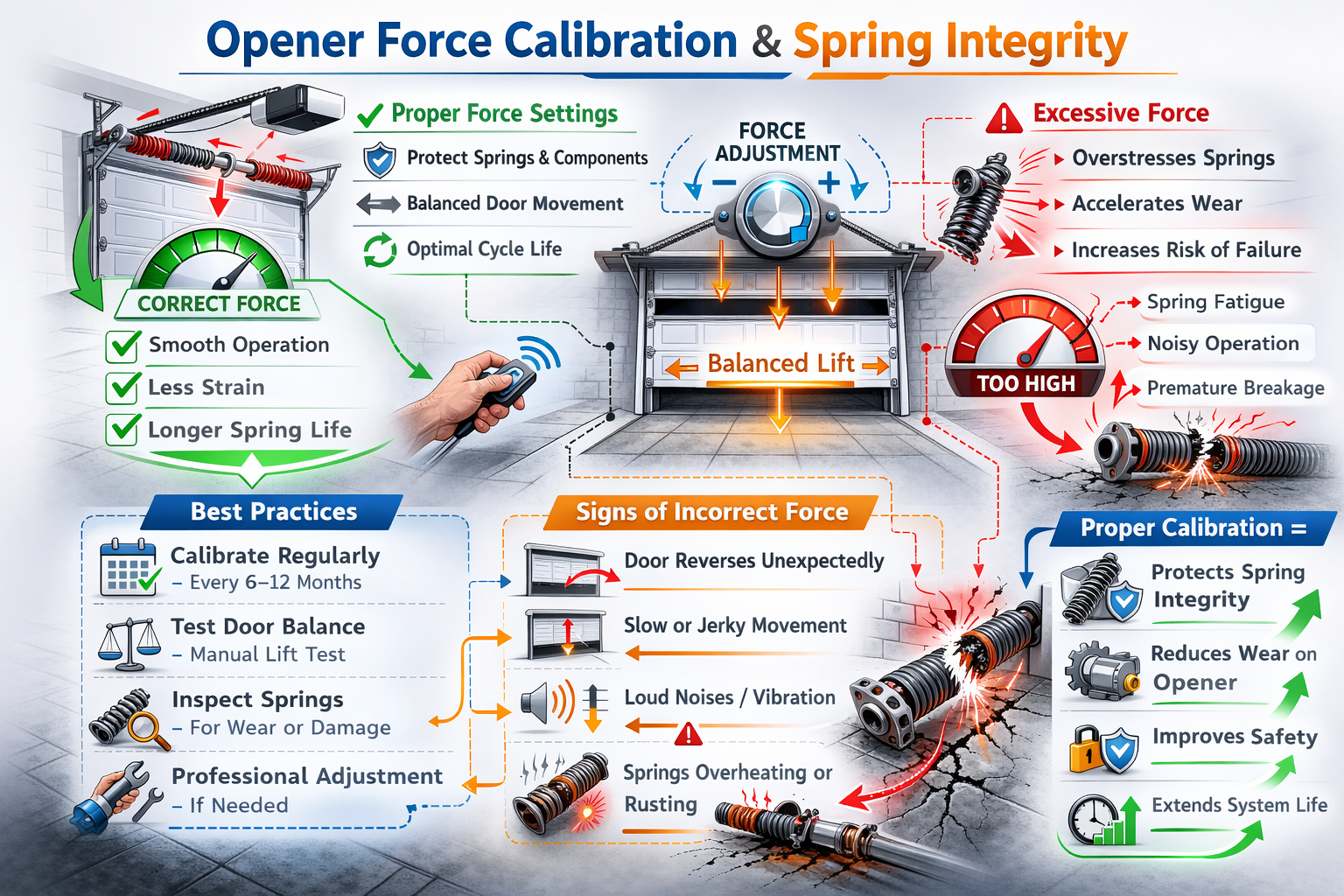
Early Warning Signs of Cycle Fatigue
- Door feels heavier
- Jerky upward movement
- Uneven lift
- Visible gap in torsion spring
- Excessive vibration
- Loud snapping sound during operation
Catching fatigue early prevents secondary damage.
Engineering a Proper Replacement Strategy
When replacing springs, proper sizing includes:
- Measuring door height
- Calculating true door weight
- Matching IPPT (inch-pounds per turn)
- Selecting correct cycle rating
- Adjusting drum alignment
- Verifying cable integrity
Shortcuts here are what lead to recurring failures.
Preventative Strategies to Extend Lifespan
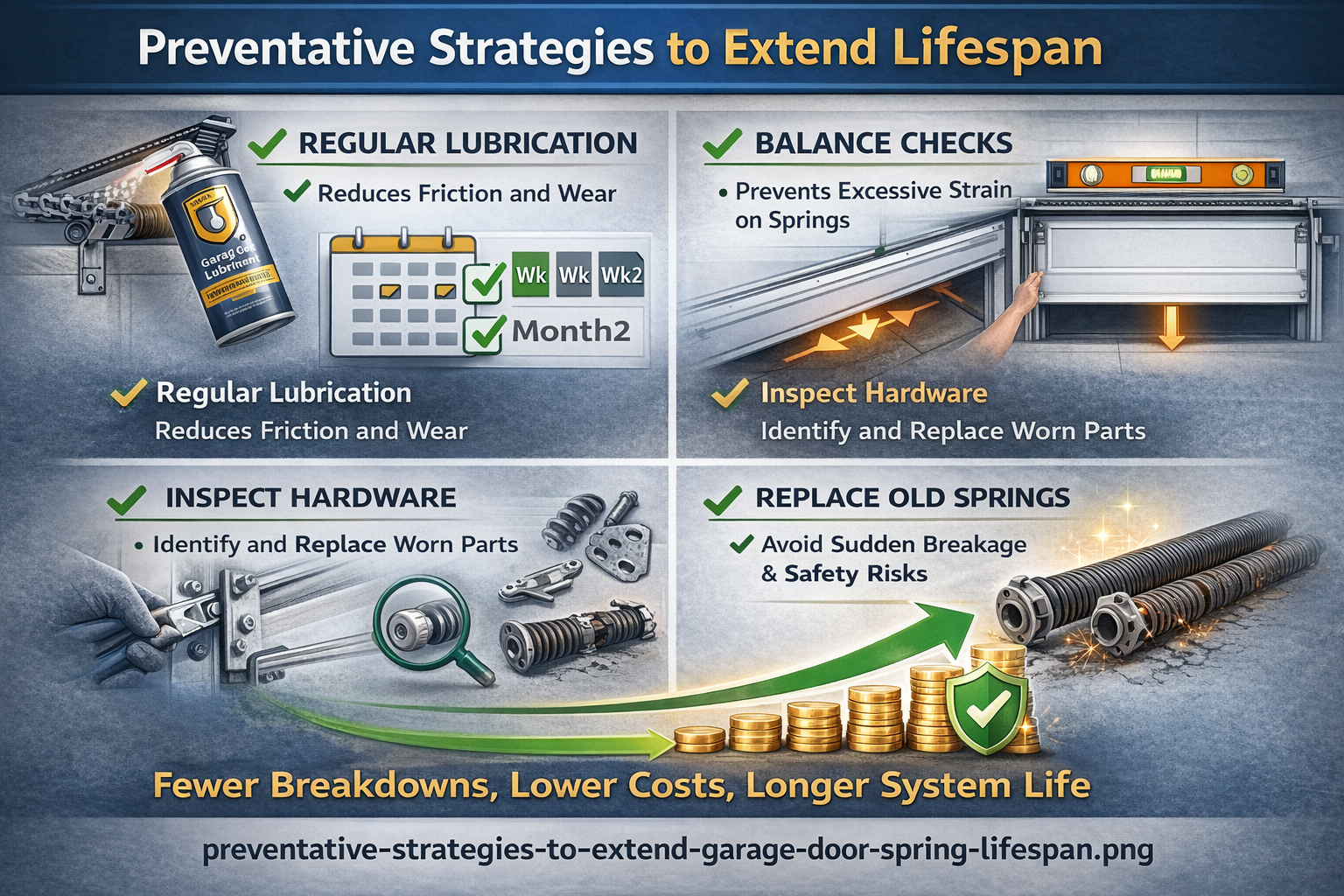
- Annual balance check
- Bearing plate lubrication
- Track alignment verification
- Opener force recalibration
- Upgrading to high-cycle torsion systems
A proactive approach reduces catastrophic failure risk.
Engineered Systems Require Informed Decisions
Garage door springs don’t fail randomly — they fail at the predictable end of their engineered cycle life. Understanding cycle ratings, torque calibration, door weight distribution, and fatigue progression allows homeowners to make smarter decisions before catastrophic failure occurs.
Whether your system is approaching its rated lifespan or already showing signs of fatigue, professional inspection and proper spring sizing can dramatically extend operational life and prevent secondary damage to openers, cables, and track assemblies.
Homeowners throughout Austin, Hutto, Pflugerville, Round Rock, Cedar Park, and surrounding Central Texas communities experience accelerated spring fatigue due to heat stress and high daily usage patterns. That’s why precision spring calibration and high-cycle upgrade options are especially important in our region.
Our team provides properly engineered spring replacement, balance correction, and full-cycle system evaluations designed for long-term performance — not temporary fixes.
Understanding the physics is step one. Ensuring your system is calibrated correctly for your home and usage pattern is what protects your investment.
Frequently Asked Questions About Garage Door Cycle Ratings
How can I tell what cycle rating my garage door spring has?
Most residential torsion springs are not labeled with their cycle rating. The rating is determined by wire diameter, coil length, inside diameter, and torque configuration. A trained technician can measure these variables and calculate the estimated cycle life based on manufacturer engineering tables. Without measurement, it’s impossible to accurately determine the remaining lifespan.
Can I upgrade to a higher cycle torsion spring?
Yes. In most cases, a higher cycle spring can be installed without modifying the door itself. Upgrading typically involves selecting a larger wire diameter and recalculating the proper torque output (IPPT – inch-pounds per turn) to maintain correct balance. A properly calibrated high-cycle spring can significantly extend system lifespan.
Do high-cycle springs require a different garage door opener?
No. High-cycle springs do not require a different opener as long as the door is correctly balanced. In fact, properly calibrated high-cycle springs often reduce strain on the opener because the door operates more smoothly and with less force compensation.
What happens if a torsion spring is mismatched to the door weight?
If the spring is undersized, it will operate under excessive stress and fatigue prematurely. If oversized, it can cause the door to lift unevenly or place unnecessary strain on the cables and drums. Proper spring matching requires accurate door weight measurement and torque calculation.
How often should torsion springs be inspected?
For standard residential usage, an annual inspection is recommended. Homes with higher daily cycle counts — such as multiple drivers or detached garages used as workspaces — may benefit from more frequent inspections. Early detection of fatigue can prevent sudden failure and secondary component damage.
What are the early signs of spring fatigue?
Common indicators include uneven door movement, increased vibration, louder operation, visible separation in the coil, and the door feeling heavier when lifted manually. These signs suggest declining torque output and approaching end-of-life fatigue.